A cloud based server for small business cuts costs, grows fast, and stays secure.
If you run a small team, the right cloud based server for small business can feel like a superpower. I have set up dozens of these stacks over the last decade. In this guide, I will break down the tech and the tradeoffs in plain words. You will see how to plan, pick, migrate, and run your cloud without stress. Expect clear steps, real examples, and tips you can use today.

What is a cloud based server for small business?
A cloud based server for small business is a virtual machine, storage, and network hosted in a provider’s data center. You rent only what you need. You scale it up or down on demand. You pay for usage, not for idle hardware.
Think of it like power from the grid. You flip a switch and it works. No need to buy a generator or worry about fuel. The provider keeps the lights on so you can focus on your work.
For most teams, it starts with a small virtual server, a database, and file storage. You add backups, security rules, and a domain. That is enough to host apps, files, email, and analytics.

Benefits of using a cloud based server for small business
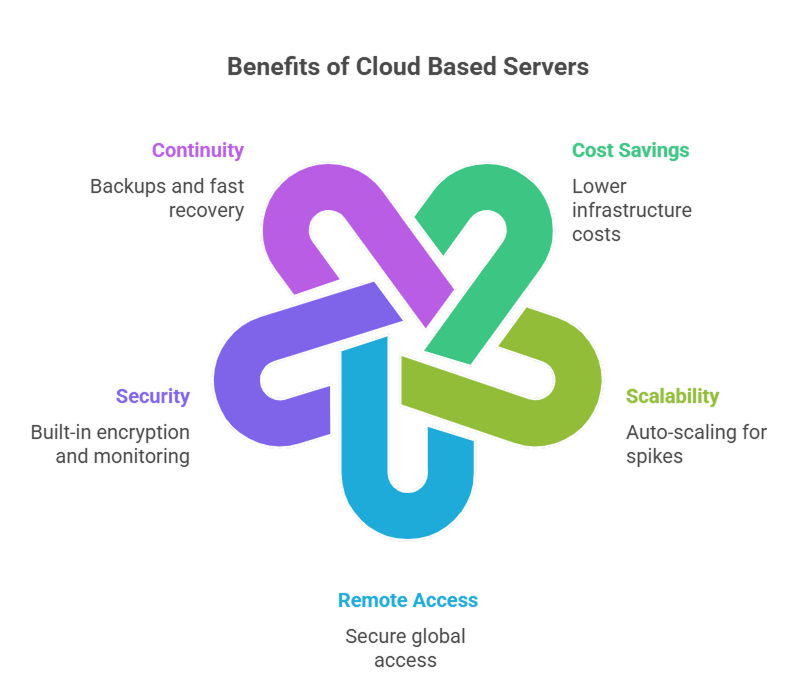
A cloud based server for small business brings clear gains. You save time, reduce risk, and improve speed.
Key benefits include:
- Lower upfront cost You avoid buying and refreshing hardware.
- Easy scale Add CPU, RAM, and storage in minutes.
- Better uptime Providers offer strong SLAs and fast failover.
- Built-in security Firewalls, MFA, and encryption are standard.
- Faster teamwork Remote staff log in from anywhere.
- Managed services Use ready databases, caching, and CDN to move faster.
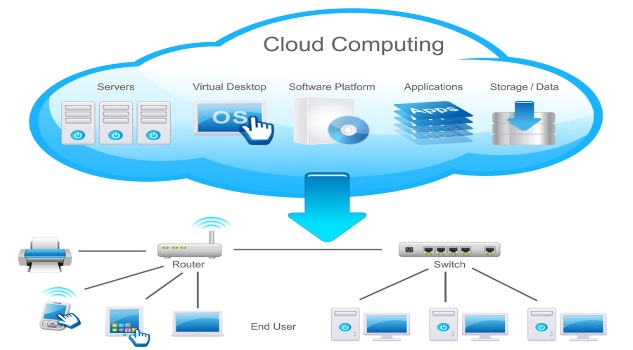
How a cloud based server works: core parts
Your setup will include a few key parts:
- Compute Virtual machines or containers that run your apps.
- Storage Block storage for servers and object storage for files.
- Network Private subnets, firewalls, and VPN access.
- Load balancer Routes traffic and keeps apps online during spikes.
- Managed services Databases, queues, and functions to cut ops work.
A cloud based server for small business can be simple at first. Start with one VM and a managed database. Add a load balancer and autoscale when traffic grows.
Types of cloud based server for small business
Different teams need different styles. Here are the main options.
Virtual Private Server (VPS)
A VPS is a good start. It is low cost and easy to manage. You get root access and can install what you want.
Managed Cloud Server
You get a tuned server with support, backups, and patches. It fits teams with little IT staff. You trade some control for speed.
Platform as a Service (PaaS)
You deploy code. The platform runs it. You do not manage servers. Great for web apps and APIs.
Serverless
You pay only when code runs. It scales fast and has low idle cost. Best for bursty traffic and microservices.
Hybrid or Multi-Cloud
You mix on-prem and cloud or use more than one cloud. It adds resilience. It needs stronger skills and planning.

Cost breakdown and pricing models
Cloud pricing can feel complex. Keep it simple with a plan and a budget.
Common models:
- Pay-as-you-go Billed by the hour or second. Great for new builds.
- Reserved terms Lower price if you commit for one to three years.
- Burstable or spot Lower rates for workloads that can pause.
Hidden costs can include egress bandwidth, backups, and logs. Track them from day one. A small cloud based server for small business often starts near a few dozen to a few hundred dollars per month. Add managed database, backup, and a CDN as you grow.
Security, compliance, and data privacy
Security is shared. The provider secures the cloud. You secure what you run in it.
Do the basics well:
- MFA for all admins and SSO for users.
- Least-privilege access with role-based policies.
- Encrypt data at rest and in transit.
- Patch OS, dependencies, and containers on schedule.
- Enable backups, versioning, and immutable logs.
If you handle payments or health data, map controls to standards. Use logging, audit trails, and data residency choices. A cloud based server for small business can meet strict rules if you plan it right.
How to choose the right provider
Pick a provider that fits your needs, not just the buzz.
Key factors:
- Performance CPU, storage IOPS, and network speed in your region.
- Price Clear rates for compute, storage, and bandwidth.
- SLA and support 24/7 chat, phone, and response times that match your risk.
- Ecosystem Managed databases, CDN, AI, and backup options.
- Ease of use Console, docs, templates, and training.
- Data location Regions near your users and legal needs.
Create a short list. Run a one-week pilot with the same workload on each. Measure speed, cost, and setup time. Choose the best mix for your cloud based server for small business.
Migration roadmap: step-by-step checklist
Follow a simple plan and reduce risk.
- Inventory List apps, data, users, and dependencies. Note size and uptime needs.
- Prioritize Move low-risk services first. Keep risky moves for last.
- Design Pick regions, VPC, subnets, and IAM roles.
- Pilot Set up one small service. Test load, security, and backups.
- Migrate Data Migrate with tools. Verify checksums and integrity.
- Cutover Pick a low-traffic window. Use DNS with short TTL.
- Validate Test end to end. Watch logs and metrics.
- Optimize Right-size servers. Add autoscale and a CDN.
Document each step. Keep a rollback path. That is how you run a clean move to a cloud based server for small business.
Common mistakes and lessons learned
I have seen teams rush and pay for it. Here are patterns to avoid.
- Lifting and shifting waste You keep old bloat and pay more. Trim before you move.
- No budget alerts Bills spike. Set budgets and alerts on day one.
- Weak IAM One admin account for all is risky. Use roles and SSO.
- Skipping backups Snapshots fail or get old. Test restores each quarter.
- Ignoring logs You cannot fix what you cannot see. Centralize logs and metrics.
From my own work with a 25-person agency, we cut cost by 38% by right-sizing servers after the first month. We also moved cron jobs to serverless and paid only for run time. That is the power of a smart cloud based server for small business.
Real-world examples
Marketing agency, 25 staff
- Need Shared file storage, web app, and client portals.
- Move One managed VPS, object storage, and a managed database.
- Result Page load time dropped from 2.8s to 1.1s. Monthly cost fell by a third.
Ecommerce shop, 12 seats
- Need Storefront uptime, SSL, and fast images.
- Move PaaS for the app, CDN for images, and a read replica.
- Result Cart errors fell 70%. Revenue rose within two months.
Both used a cloud based server for small business design. Each phased change, measured results, and tuned spend.
Performance and uptime: SLOs, SLAs, and monitoring
Set targets before you deploy. Define SLOs like 99.9% uptime and a 300 ms median page load.
Use simple tools:
- Uptime checks from more than one region.
- Log and metric alerts to Slack or email.
- Health endpoints for each service.
Read SLA terms and know credits and limits. A cloud based server for small business can meet strict goals if you size it well and monitor it daily.
Backup, disaster recovery, and business continuity
Backups are your seatbelt. Test them.
Core steps:
- Follow 3-2-1 Three copies, two media types, one offsite.
- Set RPO and RTO RPO is data loss window. RTO is restore time.
- Use cross-region or cross-zone copies.
- Rehearse restores with real data and scripts.
A cloud based server for small business needs a simple runbook. Keep it in your wiki. Update it after every test.
Day-2 operations: maintenance, observability, and cost control
Once live, keep things tidy. Small tasks prevent big fires.
- Patch on a set day each month. Automate reboots.
- Use IaC to track changes. Review pull requests.
- Tag resources by team, app, and env. Report cost by tag.
- Turn off idle dev servers at night.
A cloud based server for small business stays lean when you watch logs, right-size often, and remove unused disks and IPs.
Scaling smart: from 10 to 100 users
Plan for growth early, but do it in steps.
- Add a load balancer before you need it.
- Use autoscaling groups with safe limits.
- Cache hot data with a managed cache.
- Move big files to object storage with a CDN.
Keep a short playbook for spikes. Stress test monthly. Your cloud based server for small business will handle peaks with grace.
Best practices checklist
Use this as a quick review before launch.
- Choose a region close to users and legal needs.
- Lock down IAM with MFA and roles.
- Encrypt data at rest and in transit.
- Set budgets, alerts, and tags.
- Enable daily snapshots and weekly test restores.
- Add uptime checks and log alerts.
- Start small, right-size monthly, and reserve when stable.
- Document runbooks and disaster steps.
- Keep a rollback plan for each change.
Follow this list and your cloud based server for small business will run steady and cost less.
Frequently Asked Questions
What is a cloud based server for small business?
It is a hosted server you rent by the hour or month. It runs your apps, files, and services without buying hardware.
How much does a small setup cost each month?
Most start between tens to a few hundred dollars. Cost depends on CPU, storage, bandwidth, and managed add-ons.
Is a cloud based server for small business secure?
Yes, if you use best practices. Turn on MFA, encryption, least privilege, and regular patches.
Can I move only part of my setup to the cloud?
Yes. Many teams use a hybrid model. Start with low-risk services and expand as you learn.
What if my internet goes down?
Use mobile failover or a backup line. Keep key docs offline and plan for short outages.
Conclusion
A well-planned cloud based server for small business can speed your work, cut cost, and boost uptime. Start small, set clear goals, and measure results. Use simple guardrails for security, backups, and budgets.
Take one step today. Pick a pilot app, run a one-week test, and track cost and speed. When you are ready, subscribe for more guides, or share your questions so we can plan your next move together.
Leave a Reply