
Little business ideas are low-cost, simple ventures that solve a clear need fast.
If you want to start small, learn fast, and grow smart, you are in the right place. I have helped many founders pick, test, and scale little business ideas with lean steps and clear targets. In this guide, I share proven methods, real stories, and the exact playbook I use to turn little business ideas into steady income with low risk.

What are little business ideas?
Little business ideas are small, focused ventures you can start with little money and time. They solve a specific problem for a specific group. They use simple tools and fast tests. They aim for quick wins and steady profit.
These ideas avoid heavy overhead. They do not need fancy offices, big teams, or large loans. The goal is to reach revenue fast, then improve. Little business ideas fit solo founders, students, parents, and side hustlers. They also fit small teams that want a lean launch.
Key traits of strong little business ideas:
- Clear problem and customer fit
- Low startup cost and low risk
- Simple offer with clear value
- Fast path to first sale
- Room to grow through price, product, or reach
How to validate little business ideas fast
Do not guess. Test before you build. I follow a simple five-step loop to validate little business ideas in days, not months.
- Customer chats. Talk to 10 people who match your target. Ask about pain, budget, and past tries. Do not pitch first. Listen for exact words and then mirror them in your offer.
- Landing page test. Build a one-page site with the offer, price, and a call to action. Run small traffic from friends, social posts, or a low-cost ad. Aim for at least 5 signups or one paid order.
- Pre-sell. Offer a discount for early buyers. If no one pays, the idea is weak or the offer is unclear. Change one thing and retest.
- Micro demo. Use a simple mockup, a slide, or a short video. Show the flow. If people ask when they can buy, you are close.
- Local pilot. Run the service for three local clients. Keep notes on time, cost, and results. If you can deliver a clear win in a week, scale it.
Signals of strong validation:
- People ask for a start date and price
- At least one paid pre-order
- Clear feedback on what to keep or cut

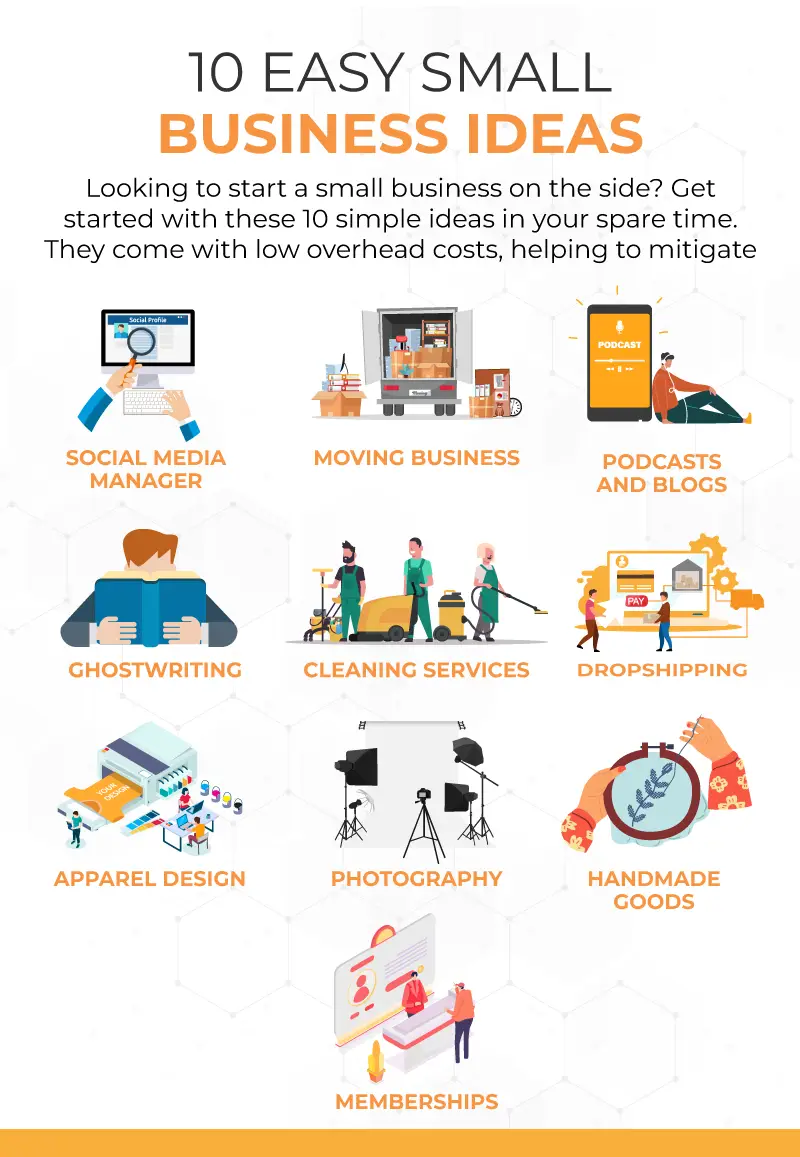
25 little business ideas you can start this week
Below are little business ideas that need low cash and simple tools. I have seen these work across towns and niches.
Digital and online services:
- Resume writing and LinkedIn revamps Simple, fast turnarounds with clear outcomes.
- Podcast editing Edit, mix, and publish episodes for busy hosts.
- Newsletter setup and ghostwriting Help small firms start and grow email lists.
- Canva template shop Sell niche social and flyer templates.
- Micro SEO services Offer page fixes, local profiles, and quick wins.
Local and home services:
- Short-term rental cleaning Fast, reliable cleaning for hosts with clear checklists.
- Mobile car detailing Go to the client and charge for convenience.
- Pet waste removal Weekly yard cleanups with monthly plans.
- Closet and pantry organizing One-day sessions with before and after photos.
- Senior tech help Set up phones, apps, and video calls.
Product and craft ideas:
- Custom gift boxes Niche themes for events and holidays.
- Print-on-demand merch Niche designs for clubs or teams.
- Handmade candles or soaps Small batches with local pickup.
- Micro 3D printing Print small parts or custom gifts.
- Upcycled furniture Find, fix, and flip with style.
Education and content:
- Kids enrichment clubs After-school STEM or art clubs.
- Language tutoring Short sessions online with clear goals.
- Course notes and study guides Sell simple, high-value summaries.
- Micro-coaching packages Four-session sprints for clear outcomes.
- Webinar setup for experts Handle tech, chat, and recordings.
B2B micro-services:
- Notion or Airtable setup Build simple systems for small teams.
- Bookkeeping cleanup One-time tidy-ups for messy books.
- Appointment setting Book meetings for service firms.
- Onboarding playbooks Create SOPs and templates.
- Local listing management Keep profiles updated and ranked.
Use these little business ideas to spark your niche. Pick one and test in one week. Keep the scope small and the value high.

Startup costs, pricing, and profit margins
Great little business ideas keep costs low. You can start many with under 300 dollars. Most costs are tools, a domain, and a basic site. Some need supplies. Many need only time and trust.
Simple unit economics:
- Service example. Pet waste removal at 30 dollars per week. Route of 20 clients. That is 2,400 dollars per month. Costs are bags, gas, and time. Margins can top 70 percent if routes are tight.
- Digital example. Resume revamp at 199 dollars per client. Five clients a week is near 1,000 dollars. Tools are writing software and a template kit. Margins can top 80 percent.
- Product example. Candle sold at 18 dollars with a 6 dollar cost. Sell 100 a month for 1,200 dollars gross profit. Scale with bundles and refills.
Pricing tips:
- Price on result, not hours. Quote packages with clear deliverables.
- Add a rush fee and a care plan. Upsells can double profit.
- Test three price points. Keep the highest that still converts.

Marketing playbook for little business ideas
You do not need a big ad budget. You need clear value, proof, and a repeatable plan. Here is the playbook I use for little business ideas.
- Local SEO. Set up a Google Business Profile. Add photos, services, and weekly posts. Ask every happy client for a review with a link.
- Simple website. One page, one offer, one call to action. Add a price range and a booking button.
- Social proof. Share before and after photos, short wins, and client quotes. Make the proof the hero.
- Partnerships. Team up with related businesses. Share leads and referral fees.
- Marketplaces. List on niche platforms to gain first clients fast.
- Email list. Send a short tip every week. Add one call to action.
- Direct outreach. Send 20 custom messages a day. Use a short script that names the problem, the fix, and one next step.
Sample outreach script:
- Hi [Name], I saw [specific issue]. I help [niche] fix this in 72 hours. Would you like a free audit this week?
Track three numbers:
- Leads per week
- Conversions per week
- Revenue per client

Operations, tools, and legal basics
Strong little business ideas run on simple systems. Keep tools lean and stable. Save your time for sales and delivery.
Tool stack to start:
- Website and booking One-page builder and a calendar tool.
- Payments Invoices and links with credit card support.
- Files Cloud storage and shared folders.
- Tasks A simple board with checklists.
- Messaging Email and a customer chat tool.
Run with standard steps:
- Create a clear checklist for each service.
- Use templates for emails and proposals.
- Batch work in time blocks to avoid context switching.
Legal and money basics:
- Start as a sole proprietor to test. Move to an LLC when you have steady revenue or risk.
- Track all income and costs. Use simple bookkeeping software.
- Set aside taxes each month. Ask a local tax pro about rules.
- Get basic insurance if you do client work on site.
Laws and permits vary by place. Check local rules for home businesses, sales tax, and food or craft items.

Scaling smart without losing the “little”
You can grow without heavy risk. Keep the heart of little business ideas while you scale.
Scale steps:
- Raise prices first. Charge for speed, quality, or custom service.
- Productize the core. Turn custom work into clear packages.
- Standardize. Use SOPs so helpers match your quality.
- Outsource the low-skill tasks. Keep client care and key work.
- Add one channel at a time. Do not chase every trend.
Quality controls:
- Use checklists and peer review.
- Track client satisfaction with a one-minute survey.
- Review refunds and complaints each week. Fix the cause.
Personal rule I follow:
- Do not hire until demand exceeds your current capacity for three weeks in a row. That keeps costs safe and growth clean.

Real stories and lessons learned
From my work with founders, I have seen patterns. The best little business ideas start with a narrow promise and deliver fast.
A client started a mobile car detailing service with a bucket and a van. He picked one suburb, one package, and next-day service. Within six weeks, he had 40 repeat clients. The lift came from route planning and text reminders.
A freelancer sold LinkedIn profile revamps. She used a four-step template and a 48-hour turnaround. She posted one case study per week. She doubled rates in two months and kept a waitlist.
Big lessons:
- Do not sell five offers at once. Sell one offer to one niche.
- Do not hide the price. Be clear and reduce friction.
- Do not delay asking for the sale. A fast no saves you time.
- Keep records of time, cost, and results. Data beats hunches.
Common mistakes to avoid:
- Overbuilding before testing
- Underpricing due to fear
- Skipping reviews and proof
- Ignoring follow-ups and referrals

Frequently Asked Questions of little business ideas
What are little business ideas?
They are small, low-cost ventures with a narrow focus and clear value. They aim for quick revenue and steady profit with simple tools.
How much money do I need to start?
Many little business ideas start under 300 dollars. Service ideas can start with less, since time is the main input.
How fast can I get my first customer?
You can land a client within one to two weeks with outreach and a clear offer. Use a simple page and direct messages to speed it up.
Do I need an LLC to begin?
Not always. You can test as a sole proprietor, then form an LLC when you see steady income or higher risk.
What if my idea does not sell?
Treat it as a test. Change the niche, the offer, or the price, and run another small experiment.
Which marketing channel works best?
Local SEO and partnerships work well for local services. For online offers, case studies and email lists convert with low cost.
How do I set my price?
Price for outcomes and speed. Offer three packages and adjust based on demand and delivery time.
Conclusion
Starting small does not mean thinking small. Little business ideas let you learn fast, earn early, and grow on your terms. Pick one idea, run a one-week test, and track clear numbers. You will learn more in seven days of action than in months of planning.
Take the next step today. Choose one offer, one niche, and one channel, and start your test. If you want more guides and tools, subscribe for weekly playbooks and templates.
Leave a Reply