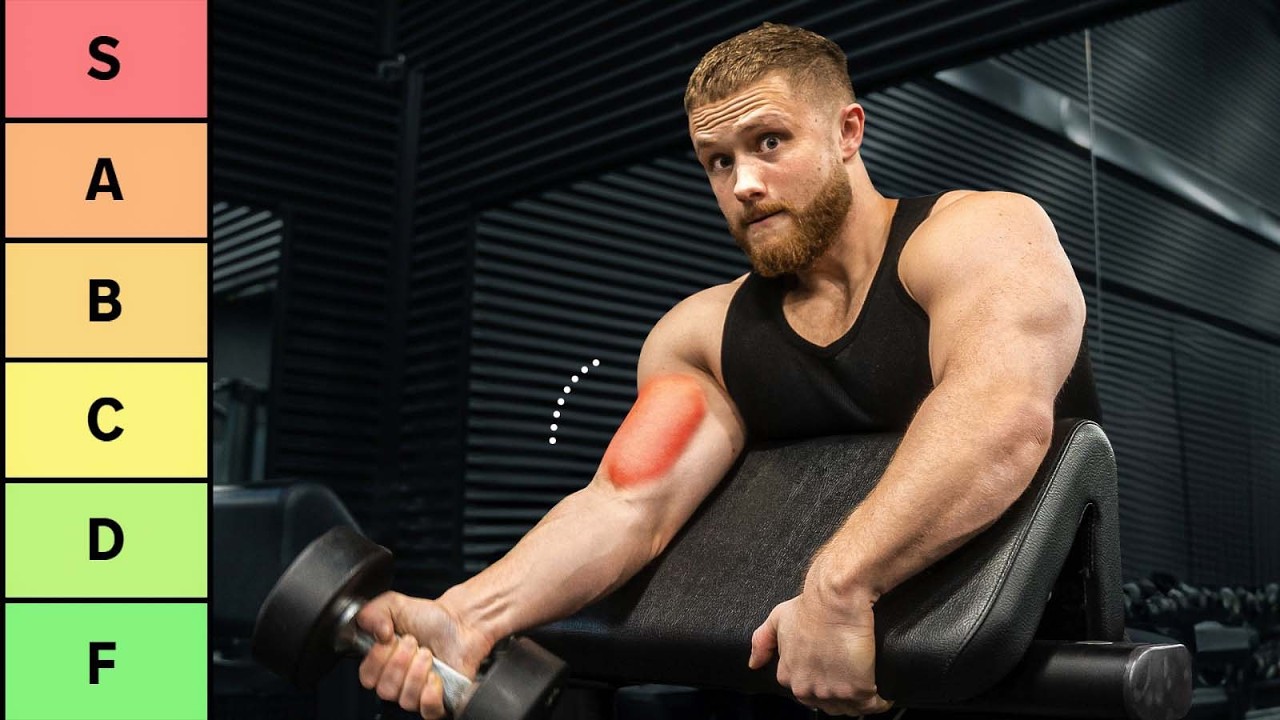
Great bicep workouts balance smart exercise selection, strict form, and steady progression.
You want bigger, stronger arms that look good and perform well. I’ve coached lifters from first curls to photo-ready arms, and the same rules apply to everyone. In this guide on great bicep workouts, you’ll get clear steps, simple cues, and proven plans that work in the gym and at home.
Understand your biceps
Great bicep workouts start with knowing what you are training. The biceps brachii has two heads: the long head (outer peak) and the short head (inner mass). Two helpers matter too: the brachialis under the biceps, and the brachioradialis in the forearm.
Your biceps do two key jobs. They flex the elbow and supinate the forearm. That means turning your palm up. Train both actions for full growth and strong, stable elbows.
To bias different areas, change grip and shoulder angle. A wide grip or elbows in front can target the short head a bit more. A narrow grip or elbows behind the body can hit the long head more. Focus on feel and range, not magic angles.

Training principles that drive growth
Great bicep workouts follow simple training rules. Use progressive overload, enough weekly volume, and clean reps. Most lifters grow well on 10 to 16 hard sets per week for biceps.
Use a rep range of 6 to 12 for most sets. Keep 1 to 2 reps in reserve so you train hard but safe. Rest 60 to 90 seconds for pump work and up to 2 to 3 minutes for heavy sets.
Tempo matters. Lower the weight in 2 to 3 seconds and squeeze at the top. Full range reps beat partials for most of your work. Save partials for advanced finishers.
Mind-muscle link is real for arms. Think “curl the pinky up and over” and “pull the biceps to the forearm.” Research suggests this can boost activation in isolation work.
Practical setup for great bicep workouts:
- Frequency: 2 sessions per week work well for most people.
- Weekly sets: 10 to 16 direct sets, split across sessions.
- Rep ranges: 6 to 12 most of the time, 12 to 20 for cables and finishers.
- Effort: Stop 1 to 2 reps before failure on most sets; push to near-failure on last set.
- Progression: Add 1 rep per set each week, then add load when you hit the top of the range.

The best exercises for great bicep workouts
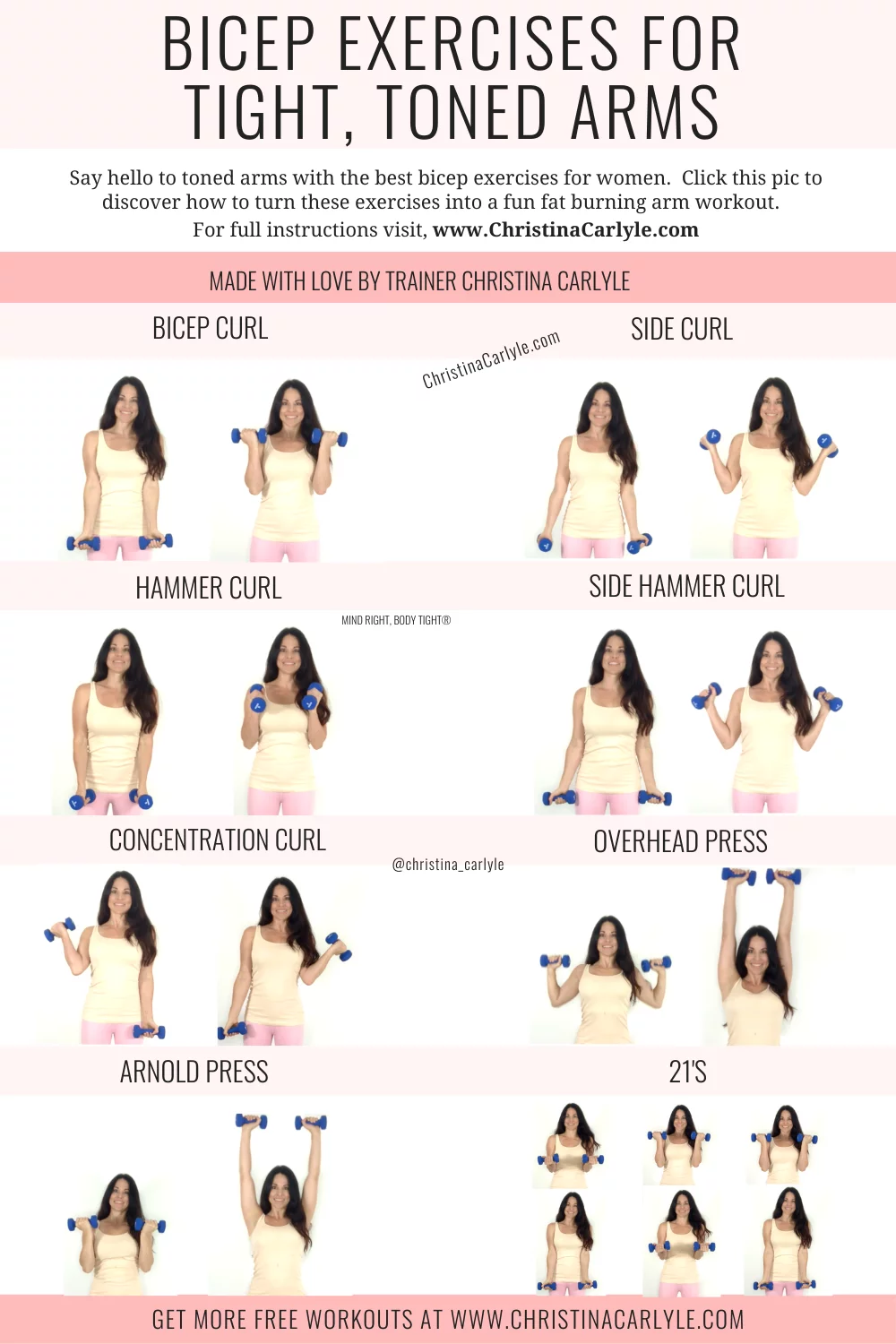
A smart mix of free weights, cables, and bodyweight gives full growth. Rotate these moves across your plan so you cover both heads and the helpers.
Barbell curl
Keep elbows pinned. Curl without leaning back. Lower under control. Great for loading and strength.
Dumbbell incline curl
Set bench at 45 to 60 degrees. Elbows stay behind the body to stretch the long head. Supinate hard at the top.
Hammer curl
Use a neutral grip to hit brachialis and brachioradialis. This supports elbow health and thickens the upper arm.
Preacher curl (EZ bar or dumbbell)
Lock the upper arm on the pad. Do not bounce at the bottom. Great for strict work and short head bias.
Cable curl (straight bar, rope, or single handle)
Constant tension. Easy to feel the squeeze. Use a slow negative and a hard peak contraction.
Chin-up (supinated)
Full body move that loads the biceps heavy. Keep chest up and pull elbows to ribs. Use a band or weight as needed.
Bayesian cable curl
Walk forward so the cable pulls back on your arm. Elbow stays behind the body for a big stretch and long head focus.
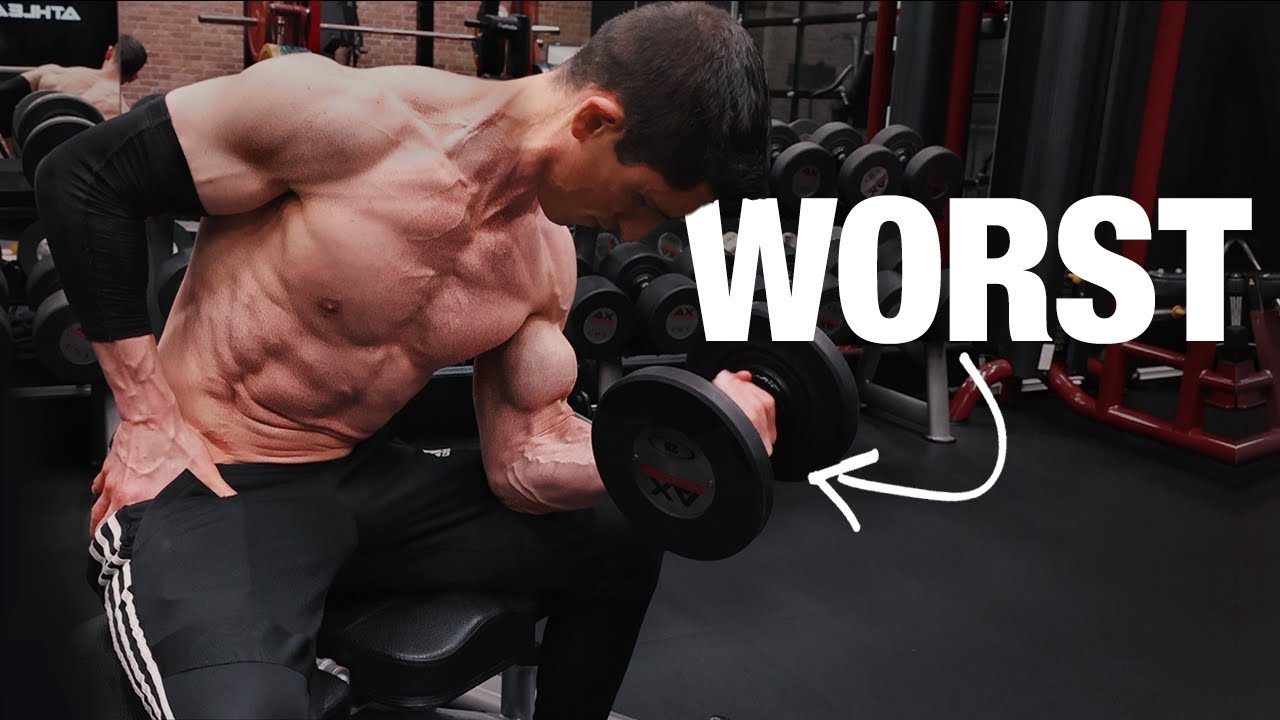
Concentration curl
Anchor the elbow on the inner thigh. Slow reps, full squeeze. Great finisher for feel and control.
Suggested sets and reps for great bicep workouts:
- Heavy pattern: Barbell curl or chin-up, 3 to 4 sets of 5 to 8 reps.
- Mid-range tension: Incline curl or preacher curl, 3 to 4 sets of 8 to 12 reps.
- Pump and finish: Cable curl or concentration curl, 2 to 3 sets of 12 to 20 reps.
Weekly plans and progression for great bicep workouts
You can build arms with minimal gear or a full gym. Here are two tested plans I use with clients.
Gym plan (twice per week)
- Day A
- Barbell curl: 4 sets of 6 to 8
- Incline dumbbell curl: 3 sets of 8 to 12
- Rope cable curl with 2-second squeeze: 2 sets of 12 to 15
- Day B
- Chin-up (supinated): 4 sets of 5 to 8
- Preacher curl (EZ bar): 3 sets of 8 to 12
- Hammer curl: 2 sets of 10 to 14
Dumbbell-only plan (twice per week)
- Day A
- Standing dumbbell curl: 4 sets of 8 to 10
- Incline dumbbell curl: 3 sets of 10 to 12
- Cross-body hammer curl: 2 sets of 12 to 15
- Day B
- Seated alternating curl: 4 sets of 8 to 12
- Bayesian-style banded curl or leaning curl: 3 sets of 10 to 15
- Concentration curl: 2 sets of 12 to 16
Warm-up and rest
- 1 to 2 light ramp sets before the first move.
- Rest 90 seconds for most sets; 2 minutes for heavy barbell or chin-ups.
Progression model
- Week 1 to 3: Add 1 rep per set when you can, then add 2.5 to 5 pounds.
- Week 4: Keep load, match Week 3 reps, stop 2 reps from failure.
- Week 5 to 7: Repeat climb. Small load jumps win over time.
- Week 8: Deload. Cut volume in half and stop 3 reps from failure.
Technique mastery and cues
Good form makes great bicep workouts safer and more effective. It also keeps tension where it belongs.
Clean curl checklist
- Stand tall, ribs down, glutes on.
- Pin elbows close to the ribs unless the move says otherwise.
- Lead with the pinky during supination to fire the peak.
- Control the negative for 2 to 3 seconds.
- Pause briefly at full extension. Then curl again.
Common mistakes and fixes
- Swinging the weight: Lower the load and brace your core.
- Elbows drifting forward: Use a preacher bench or wall to learn strict reps.
- No squeeze at the top: Use cables or lighter dumbbells and add a 1-second hold.
- Pain at the elbow: Switch to neutral grip and reduce volume for a week.
Breathing and grip
- Exhale as you curl. Inhale on the way down.
- Use a full thumb-around grip for most sets.
- Try a fat grip or towel once per week to challenge the forearms.

Recovery, injury prevention, and nutrition
Great bicep workouts also depend on rest and elbow health. Tendons love variety and steady loads. They hate sudden spikes.
Warm-up smart
- 2 minutes of light cardio to raise heat.
- 1 to 2 sets of light hammer curls and band pushdowns to warm the elbow.
- First work set should still feel crisp, not grinding.
Elbow care
- Rotate grips each block: supinated, neutral, and reverse.
- Add 2 to 4 sets of reverse curls per week for balance.
- If pain flares, cut total sets by 30% for 7 to 10 days. Use neutral grips and slow eccentrics.
Sleep and stress
- Aim for 7 to 9 hours of sleep. Growth happens when you rest.
- Walk daily to aid recovery and keep joints happy.
Nutrition made easy
- Protein: 0.7 to 1.0 grams per pound of body weight per day.
- Carbs: Most around training to fuel hard sets.
- Creatine monohydrate: 3 to 5 grams daily to support strength and size.
- Hydrate well; even small dehydration hurts performance.

Advanced methods used wisely
Advanced tools can boost great bicep workouts, if you still keep form sharp. Use them at the end of a session and not every week.
Smart options
- Drop sets: Perform a hard set, drop weight by 20 to 30%, do more strict reps.
- Rest-pause: Hit near-failure, rest 15 seconds, do mini sets to add 5 to 8 total reps.
- Tempo overload: 4-second lowers for 6 to 8 reps to spike tension.
- Mid-range partials: After full reps, add 5 to 10 short reps in the most loaded angle.
- Supersets: Pair curls with triceps pressdowns to save time and pump arms.
Rules of use
- Limit to 1 finisher method per session.
- Keep recovery in check. If elbows get cranky, pull back.
- Track performance. If load and reps stall for 2 weeks, reduce intensity techniques.
Frequently Asked Questions of great bicep workouts
How many times per week should I train biceps?
Two sessions per week are ideal for most people. It spreads volume and improves recovery and skill.
How many sets do I need for growth?
Most people grow on 10 to 16 direct sets per week. Start lower and add sets if progress slows and recovery is good.
Are cables better than free weights for biceps?
Both work. Cables give constant tension and a great squeeze, while free weights allow heavy loading and strength.
Do I need chin-ups for great bicep workouts?
You do not need them, but they help a lot. Chin-ups load the biceps heavy and also build your back.
How long until I see results?
With solid effort and food, you can see changes in 4 to 6 weeks. Bigger changes show in 12 weeks and beyond.
Should I train to failure on every set?
No. Save failure for the last set of an exercise. Most sets should stop 1 to 2 reps short.
Is creatine helpful for arm growth?
Yes. It helps you do more quality reps and recover better. It is safe for healthy adults.
Conclusion
Build your plan, track your reps, and keep your form honest. Great bicep workouts use steady progress, varied grips, and full range curls that you feel from pinky to shoulder. Small weekly wins add up to strong, defined arms.
Pick one plan here and start this week. Note your loads, reps, and how your elbows feel. If this helped, subscribe for more training guides, ask a question in the comments, or share your own arm day tip.
Leave a Reply